
Watch the 50 second version on YouTube.
Two jobs in one room
The living room is the one room in the house that has to do everything. It is where the family watches TV, where friends talk over dinner, where the kids play, and where someone reads in the corner while someone else scrolls on the couch. Every one of those uses makes sound, and every one of them wants the room to sound different.
That is why the living room is the hardest room in the house to get right, and also the most rewarding. A bedroom only has to be quiet. A living room has to be quiet and lively at the same time. It has to keep the TV clear, keep voices easy to follow, and keep the street outside, all without looking like a recording studio.
Why the living room echoes
Most living rooms are built to echo. The floor is wood or tile, the walls are flat and bare, the ceiling is high, and the biggest surface in the room is a sheet of glass. Every hard surface bounces sound back into the room, and with nothing soft to catch it, the bounce piles up. That pileup is what people call echo, and it is the reason a normal conversation can feel loud in a room that is not loud at all.
The TV makes it worse, because the TV is a source that never stops. Dialogue, music, effects, all of it leaves the speaker, hits the bare wall behind the couch, and comes back a fraction of a second later. The brain hears the direct sound and the bounce together, and the words get muddy. So people turn the TV up, which makes the bounce louder too, and the room gets harder to hear in, not easier.
Then add the street. The living room usually has the biggest windows in the house, and windows are the weakest part of any wall. Traffic, voices outside, a dog barking two doors down, all of it comes through the glass and joins the echo inside. The room ends up loud from both sides at once.
Start with the soft stuff
The fix starts with the cheapest things in the room, because soft surfaces are what catch the bounce. A thick rug on a hard floor is the single best first step in most living rooms. It covers the biggest hard surface, it takes the ring out of footsteps, and it softens the TV sound before it ever reaches the walls. A rug with a thick pad under it does more than a thin rug, and a rug that covers the seating area does more than a small one in the middle of the floor.
Curtains are next, and they earn their place here in a way they do not on a window you are trying to soundproof. A heavy curtain over a big window soaks up some of the bounce on that whole wall, and it also takes a little edge off the street sound coming through the glass. It will not block the street on its own, and our guide to soundproof curtains explains why, but as a treatment for the echo inside, a full length heavy curtain is a real help.
Then look at the furniture. A fabric sofa soaks up far more sound than a leather one. Cushions on hard chairs, a bookshelf full of books against a bare wall, a fabric ottoman instead of a glass coffee table, each one is a small absorber, and together they change the room. None of these is a soundproofing product. All of them are the reason a furnished room sounds calmer than an empty one.
The TV problem at night
Daytime echo is one problem. Nighttime TV is another, because at night the issue is not the echo inside the room, it is the sound leaving the room. Bass from a film or a game travels through walls and floors with almost nothing lost, and a shared wall or a floor above a bedroom carries it straight to the people trying to sleep.
The first move is placement. A TV pushed flat against a shared wall couples the sound straight into the wall, and a subwoofer sitting on a hard floor in the corner does the same to the floor. Pull the TV a little way off the wall, move the subwoofer away from the corner and off the floor on a dense pad, and turn the bass down a notch after dark. These are free changes, and in a flat or a townhouse they are often enough to stop the complaints.
If the sound still carries, the gaps are next. A living room door with a gap at the bottom leaks more sound than the whole door. A strip of weatherstripping around the frame and a sweep at the bottom closes it, and our guide to the door explains the full fix. The same goes for any opening into the hall. Close the path and the sound has to fight through the wall instead, which is a much harder path.
Panels that look like decor
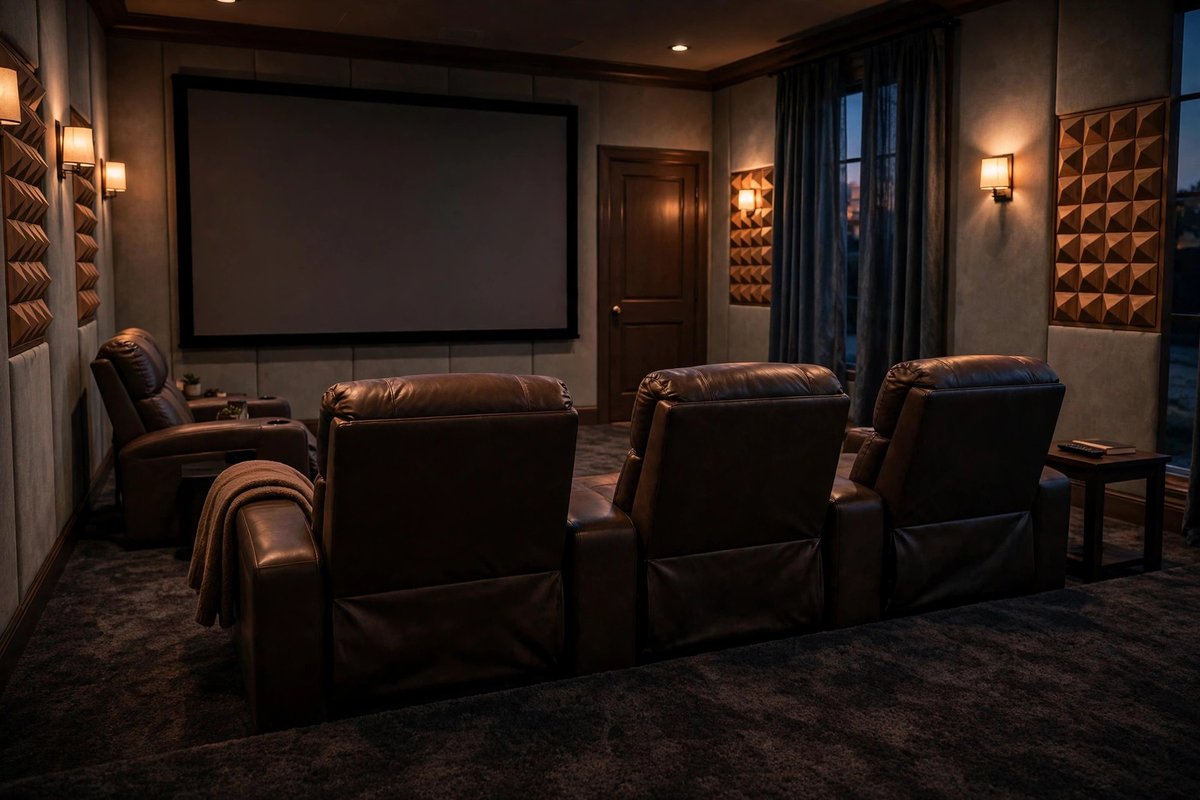
Once the soft stuff is in place, the wall behind the TV is the best place for real treatment. That wall takes the direct sound from the speakers and throws it straight back at the people on the couch, so treating it pays off more than treating any other wall. This is where acoustic panels earn their place, and in a living room they have to look like part of the room, not like equipment.
Wooden acoustic panels are the easiest fit in most living rooms. They look like furniture, they come in slats and grooved patterns that match wood floors and shelving, and they take the edge off the mid and high sounds that make a room feel harsh. Our guide to wooden acoustic panels covers which patterns do what. Fabric wrapped panels are the softer option, and they can be covered in a fabric that matches the sofa or the curtains so they read as wall art. Both are real treatment, and both belong on the wall behind the TV or on the bare wall opposite it.
Keep the panels where they do the most work. A few panels on the wall behind the TV and a few on the wall the couch faces will do more than covering one whole wall. And skip the foam wedges sold as soundproofing. Foam soaks up a little high sound and almost nothing else, and it looks like a studio no matter how you arrange it. Our guide to acoustic foam explains the difference.
What to skip
A living room attracts quick fixes, and most of them waste money. Egg cartons and foam tiles do almost nothing, and they look worse every day they stay up. A single heavy curtain will not block street noise, and a white noise machine will not make the TV clearer, it only adds another sound to the pile. Each of these is bought to solve the wrong job.
The other mistake is buying treatment before finding the leak. If the street comes through a window with a broken seal, no panel on the wall will fix it. Seal the gaps first, then treat the echo. Measure if you can, even with a phone app, because the measurement tells you whether the room or the wall is the problem, and it keeps you from buying the same fix twice.
The order that works
Put it together in this order, and stop when the room sounds right. First, soften the room: rug, curtains, soft furniture. Second, place the TV and the subwoofer so they are not driving the wall and the floor. Third, seal the door gaps and any opening into the hall. Fourth, add panels on the wall behind the TV and the wall opposite the couch. Each step is cheap until the panels, and many rooms never need the fourth step at all.
If the room still carries sound to the neighbors, or the street still walks through the window after all four steps, that is the point to call us. A short noise study can show which path the sound is taking, and the fix follows the measurement instead of a guess. Request a free quote at silentical.com/quote/ or call (716) 330-1147. Tell us what the room is used for, where the noise comes from, and what the room is made of, and we will tell you whether the gap, the glass, or the room itself is the place to start.