
Walk into a noisy office, a busy restaurant, or a classroom with hard floors and bare walls, and you hear the room before you hear the people in it. Voices bounce off every surface, pile up, and turn ordinary talk into a blur. That blur is what polyester fiber acoustic panels are made to fix. They soak up the reflections that make a room sound echoey, so speech comes through clearer and the room feels calmer.
This guide explains what these panels actually do, what they cannot do, and how to use them well.
What a panel actually does
Sound in a bare room behaves like a ball bouncing off hard walls, floor, and ceiling. Each bounce sends a slightly delayed copy back to your ears, and those copies blur the original. A polyester fiber panel breaks that cycle. Sound enters the fiber, loses energy as it moves through it, and comes back much weaker. The reflections that made the room feel loud and muddy drop away.
The result is easy to hear. In an office, phone calls get easier to follow. In a classroom, the teacher stops sounding like she is talking inside a tunnel. In a restaurant, tables stop shouting to be heard over the tables next to them. The panel does not make the room silent. It makes the sound that belongs in the room easier to live with.
What a panel does not do
Here is the honest limit, and it matters more than any other point in this guide. A polyester fiber panel does not block sound from passing through a wall. If you can hear the television from next door, or traffic through a closed window, panels on your wall will not stop it. Blocking sound takes a different job: sealing gaps, adding mass to the wall, and in bigger projects separating one layer of wall from another so vibration cannot travel straight through.
The same limit applies to footsteps from upstairs. Impact noise travels through the structure itself, not through the air in your room, so wall panels will not quiet it. Panels also will not fix a leaking door or a window that never quite seals. Treat those leaks first, then use panels for the echo that remains. Buying panels for a blocking job is the most common way people spend money on acoustics and hear almost no change.
Meet the panel itself
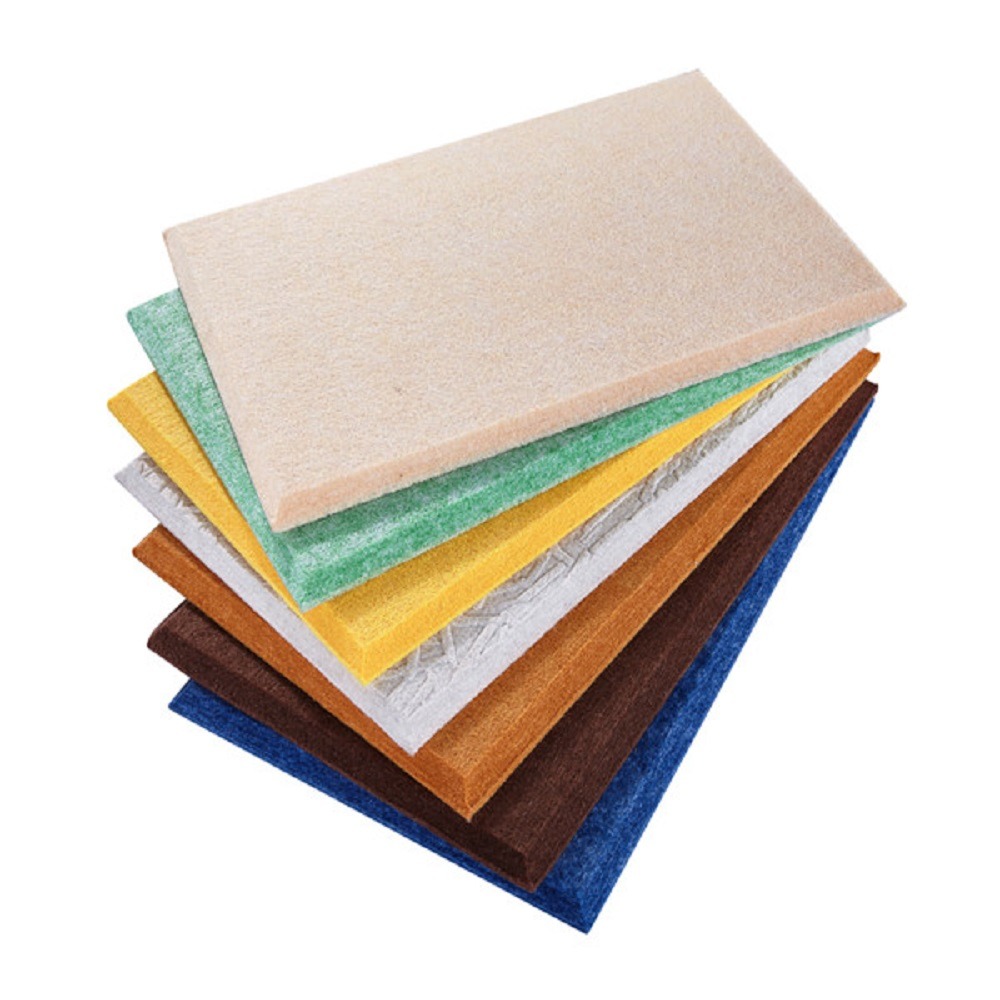
The Silentical Polyester Fiber Acoustical Panel is a clean, modern absorber for walls and ceilings. Its smooth, solid color face looks like a design choice while it quietly absorbs the reflections that make rooms echoey. It is made from 100 percent polyester fiber, with a minimum of 75 percent post consumer recycled content, and it contains no Red List chemicals. The product page describes it as safe, non toxic, non irritant, and non allergenic, with a smooth surface that keeps its appearance for years. The page lists it in 2 mm and 3 mm thicknesses, and pricing, options, and delivery are confirmed through a quote request, since there is no online checkout for this panel.
Looks matter here, because these panels stay visible. The panel comes in 95 stock colors, with custom colors available, so a treatment plan can match a room instead of announcing itself. A classroom can pick a calm color, a restaurant can pick panels that read as part of the decor, and an office can use color to mark quiet focus areas.
Where these panels work best
Panels earn their place anywhere people talk, listen, or eat in a room with hard surfaces. The product page lists offices, classrooms, healthcare, retail, and hospitality as suited uses:
- Offices and meeting rooms. Hard floors and glass walls reflect every voice back into the room.
- Classrooms and training rooms. Blurred consonants make students work harder just to follow the lesson.
- Restaurants and cafes. Diners talk louder as the room gets louder. Panels break that loop.
- Home studios and practice rooms. Recording sounds cleaner with reflections controlled, though panels alone will not keep sound from reaching the rest of the house.
- Any noisy room with hard surfaces. Lobbies, waiting rooms, and large living spaces all calm down when reflections are absorbed.
Coverage and placement: how much, and where
Coverage matters more than any single panel. One panel on a large bare wall makes a small dent, because most sound still bounces off the untreated surfaces around it. A room starts to feel different when a meaningful share of its reflective surfaces is covered, spread across the room rather than clustered in one corner.
Placement matters almost as much as coverage. Start with the surfaces that bounce sound straight back to the people listening: the wall behind and beside the talkers, the wall facing them, and the ceiling above a seating or meeting area. In a classroom, that means the wall behind the teacher and the side walls near the students. In a restaurant, it means the walls and ceiling over the tables, not a single feature wall by the door. Spread panels evenly and listen after each round before adding more. A room can be over treated, and a flat, dead room feels almost as strange as an echoey one.
Thickness and air gap basics
Thicker absorption generally handles lower sounds better, because low sounds carry longer waves that need more material to lose their energy. That is why a thin panel can tame bright reflections while leaving a low rumble mostly untouched. It is also why a small gap behind a panel helps: sound passes through the panel, bounces off the wall behind it, and passes through the panel a second time on the way back.
Install and care basics
Plan the layout before anything goes on the wall. Mark where people sit, stand, and talk, note the hard surfaces facing them, and lay the panels out on paper first so coverage spreads evenly. Mounting options, pricing, and delivery are confirmed when you request a quote, so raise questions about your wall type or ceiling height at that stage rather than after panels arrive.
For care, keep panels dry. The product page does not publish a cleaning guide, so if your room is a restaurant, a clinic, or a school where cleaning routines matter, ask about care for your chosen color and finish when you request a quote.
When to call for a measurement or a full treatment plan
Many rooms improve with common sense placement and a sensible amount of coverage. Call for help when the problem is bigger than echo alone, or when the spend is big enough that guessing gets expensive. If your room has echo plus sound coming through the walls, you need a plan that separates the two jobs, because panels only solve one of them. If the room is large or tall, a walk through with measurements will find reflection paths you cannot spot from the floor.
The bottom line
Polyester fiber acoustic panels do one job very well: they calm echo and make speech clearer in rooms with hard surfaces. They do not block sound through walls, quiet footsteps from upstairs, or seal a leaking door. Used for the right job, spread across the room where reflections actually travel, they turn a loud, blurry room into one where people can hear each other without raising their voices.
If your room sounds echoey and you want to know how much coverage it needs, or whether echo is only part of the problem, we can help you measure first and order second. See the Silentical Polyester Fiber Acoustical Panel, request a quote at silentical.com/quote/, or call (716) 330-1147 and describe the room at its worst.