
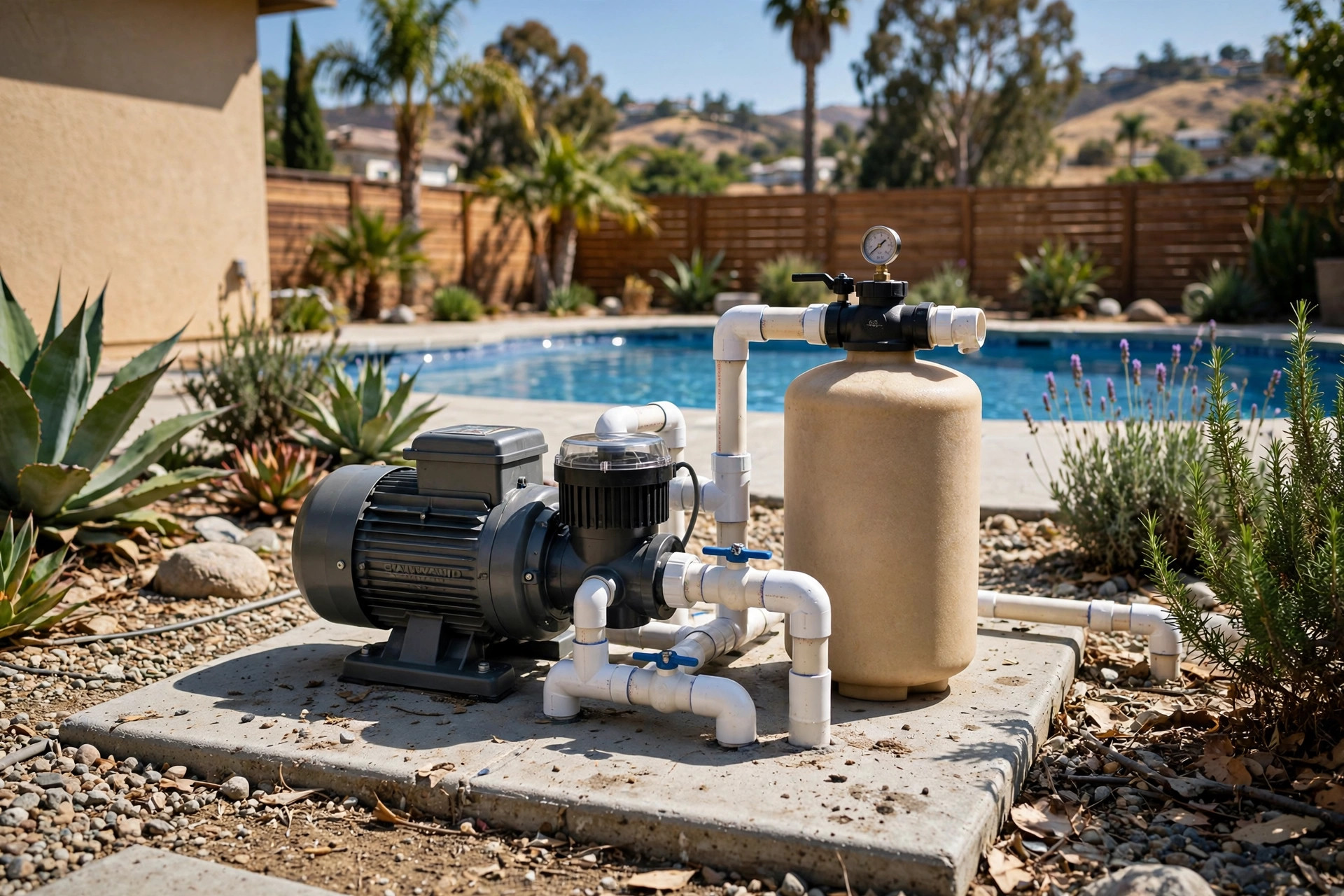
Why a pool pump sounds so loud
A pool pump is a motor bolted to a hard surface, pushing water through rigid pipes, and it runs for hours at a time. The motor hums, the pump vibrates against the pad, and the pipes carry that vibration into the house and the yard. That mix is why a pump can sound louder than its size suggests, and why it is hard to ignore once you notice it.
The hum itself is steady, and steady sounds are usually easy to tune out. A pump adds a second layer, the vibration. Vibration travels through concrete, through pipes, and through the ground, so you can hear the pump and feel it at the same time.
The third piece is the schedule. Most pumps run in long cycles, often in the early morning or late at night, which is exactly when the neighborhood is quiet and the sound stands out.
Check the pad and the vibration first
Start at the pad. A pump that sits on bare concrete sends every bit of vibration straight into the ground. A thick rubber mat or isolation pad under the pump breaks that path, and it is the cheapest fix on this list. Make sure the pad is level and the pump sits flat on it, with no corner rocking.
Check the bolts and the mounts next. A loose bolt lets the pump shake against the pad, and a worn rubber mount stops absorbing anything. Tighten what is loose, and replace mounts that are cracked or flattened. This is a small job, and it can drop the sound a lot before you spend anything else.
Listen close to the pump with the cover off, if your pump has a cover you can lift safely. A smooth hum is normal. A rattle, a grinding sound, or a high squeal is not, and it usually means a worn bearing or a part that is about to fail. Note what you hear, because that detail matters if you call a pro.
Cover it, but let it breathe
An enclosure is the biggest single step you can take, and it works because it puts mass between the pump and your ears. A simple cover made from heavy board, a small shed, or a ready made pump cover all do the same job, as long as the cover is solid and fits close around the pump.
Airflow is the part people get wrong. A pump motor makes heat, and a sealed box will cook it. Every enclosure needs vents, low on one side and high on the other, so air moves through while the sound stays in. A vent lined with a simple baffle, a board that blocks the direct path, keeps the sound from escaping straight through the opening.
Line the inside of the cover with a heavy material, not thin foam. Foam calms echo inside the box, but it does not block sound. A layer of mass loaded vinyl or a second sheet of board on the inside does the real work.
Quiet the pipes
Rigid pipe is a highway for vibration. Every elbow and straight run carries the pump shake into the house, the fence, and the deck. A short flexible connector between the pump and the rigid pipe breaks that path, and it is one of the best value fixes in pool plumbing.
Support the pipes so they cannot rattle. A pipe that hangs loose will tap against a wall or a post every time the pump cycles. Add clamps and hangers, and put a small rubber pad between the pipe and anything it touches.
Check where the pipes pass through a wall or a deck. A pipe that touches the framing will carry sound straight into the house. A sleeve of foam around the pipe at the crossing, or a small gap filled with a flexible sealant, stops the contact and the sound that comes with it.
Run it when the noise matters least
A pump does not need to run all day. Most pools stay clean on a shorter cycle, and a shorter cycle means fewer hours of hum. Ask your pool service what the shortest run time is for your pool, then set the timer to that, and run it in the middle of the day when the neighborhood is already awake.
If your pump has a low speed setting, use it. A pump on low moves less water per minute, so it needs a longer run, but it hums far less while it runs. For many pools, a long slow run is quieter overall than a short loud one, and it often costs less to run.
When to call a pro
Some pump noise is a repair, not a soundproofing job. A grinding bearing, a screech on startup, or a pump that trips its breaker is telling you something is failing inside. A pool tech can replace a bearing or a seal for far less than a new pump, and the quiet that follows is the proof.
If the pump is old and loud even after the pad, the cover, and the pipes are fixed, it may simply be worn out. A newer pump, especially a variable speed model, runs quieter by design, and the difference is easy to hear.
If the pump noise reaches a neighbor, or a neighbor has already mentioned it, a short noise study can settle the question. A measurement shows how loud the pump actually is at the property line and at the neighbor window, and it shows which fix matters most. Our guide to what a noise study is, and when you need one, explains what the study covers.
What to skip
Skip the thin foam box. A cover made from thin foam or a light plastic tub does almost nothing, because light things do not block sound. A cover has to be heavy to work, and a foam box will also trap heat and shorten the life of the motor.
Skip the sound blanket sold as a cure on its own. A blanket around the motor can help a little, but it does not fix the pad, the pipes, or the schedule, and a blanket that blocks airflow can cook the motor. Treat it as a finishing touch after the real fixes, not the fix itself.
The order that works
Put it together in this order, and stop when the backyard sounds right. First, check the pad and the mounts, and fix anything loose. Second, quiet the pipes with a flexible connector and proper supports. Third, build or buy a ventilated cover. Fourth, set the timer to the shortest daytime run that keeps the pool clean.
If the pump is still loud after all four steps, that is the point to call us. A short noise study can show where the sound is coming through, and the fix follows the measurement instead of a guess. Request a free quote at silentical.com/quote/ or call (716) 330-1147. Tell us when the pump runs, where you hear it, and whether the pad, the pipes, or the motor seems to carry it, and we will tell you whether the pad, the pipes, or the pump itself is the place to start.