
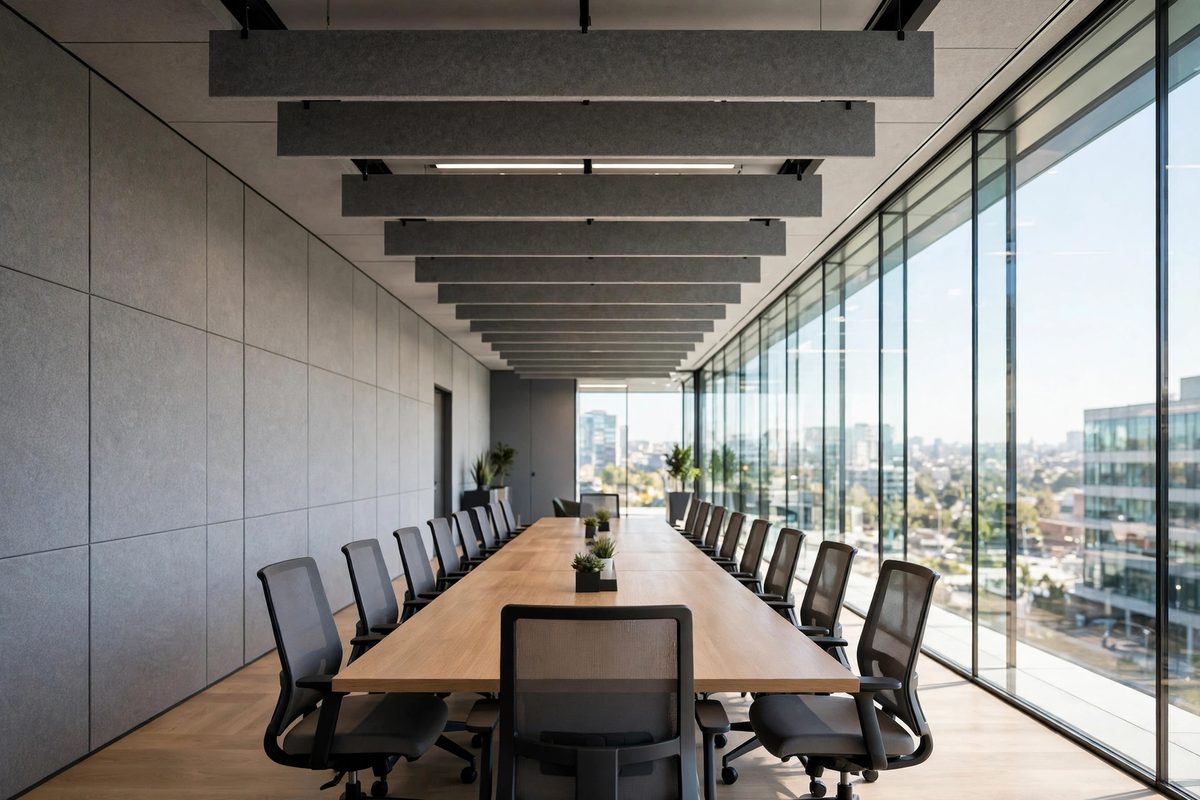
Hybrid meetings have made bad room acoustics impossible to ignore. A conference room can look perfect on camera, the microphones can be expensive, and still the people on the call hear a hollow, echoey mess while everyone in the room has to strain to follow the conversation. The room itself is usually the problem, and it is more fixable than most people expect.
The room is an echo chamber, and the mic hears it first
Conference rooms are built like echo chambers on purpose, or at least they end up that way. Big glass wall, hard table, drywall, maybe a thin carpet tile floor and nothing on the walls. Every one of those surfaces bounces sound around. When you speak, the microphone hears your voice plus dozens of delayed reflections of it.
That is why remote participants hear you twice, or hear you fading in and out. The room's echo does more damage on a call than in person, because in the room your brain tunes the echo out. The microphone cannot. Acoustic echo cancellation software tries to clean it up, but it is fighting the room, and in a bright reflective room it loses.
Start by calming the reflections
The goal is not to kill all sound in the room. A dead room feels strange and makes people talk louder. The goal is to calm the reflections enough that speech stays clear.
Walls are the biggest win. Fabric wrapped acoustic panels on the parallel walls cut down the flutter echo that makes speech sound harsh and repeated. You do not have to cover the walls; targeted panels at ear height, where reflections bounce between the walls behind the table, do most of the work.
Glass is the second offender. That wall of windows looks great and does nothing good for sound. It cannot take a panel, but heavy curtains, partial height absorbers on the adjacent walls, or micro perforated treatments control the reflections it throws back into the room.
Then look up. High ceilings bounce sound down onto the table and back up again. Suspended baffles or acoustic ceiling clouds absorb that vertical bounce, which is often what makes a large room sound cavernous on a call.
Do not forget the noise you stopped noticing
Every room has a background noise floor, and microphones hear it louder than you do. HVAC vents blowing across the table, a projector fan humming along, fluorescent light ballasts buzzing quietly. In person you tune these out. On a call they sit underneath every word and make speech harder to follow.
Some of this is layout: do not put the conference table under the loudest vent. Some of it is maintenance, like a fan that got noisier than it should be. When the noise comes from the HVAC system itself, a professional can measure it and tell you whether it is the equipment, the duct routing, or just the volume of air being pushed.
Privacy is a separate problem from echo
A room can sound clear and still leak every word into the hallway. Echo control keeps the sound inside the room manageable. Keeping confidential conversation inside the room is sound isolation, and it is a different job: door seals, sealed ceiling plenums, and the way the wall meets the ceiling all matter more than wall panels do.
If your meeting room sits next to a quiet workspace, check this the honest way. Have someone read a normal volume script in the room while you stand outside the closed door. If you can follow the conversation, you have an isolation problem, not just an echo problem.
When to measure instead of guessing
You can do a lot with panels and curtains in a standard conference room. But when the room is large, has an unusual shape, hosts high stakes meetings, or needs documented results for a lease buildout or a compliance requirement, guessing stops being enough.
A professional room assessment measures reverberation time and background noise levels, identifies which surfaces and systems are doing the damage, and produces a treatment plan with targets the result can be checked against. If you run an office in the San Diego area, including Escondido and the surrounding North County communities, that is the kind of work we do every week.
The bottom line
Bad conference room sound almost always comes down to three things: hard reflective surfaces throwing echoes into the microphones, background noise you have stopped noticing, and confusion between making a room sound clear and making it sound private. Treat the reflections first, quiet the noise floor second, and measure when the stakes or the room demand it.
If your team dreads the conference room because of how it sounds on calls, we can help. Add products to a quote cart on the site, or request a proposal for a room assessment. Call (716) 330-1147 and tell us what the room sounds like. We will tell you honestly what it needs.