
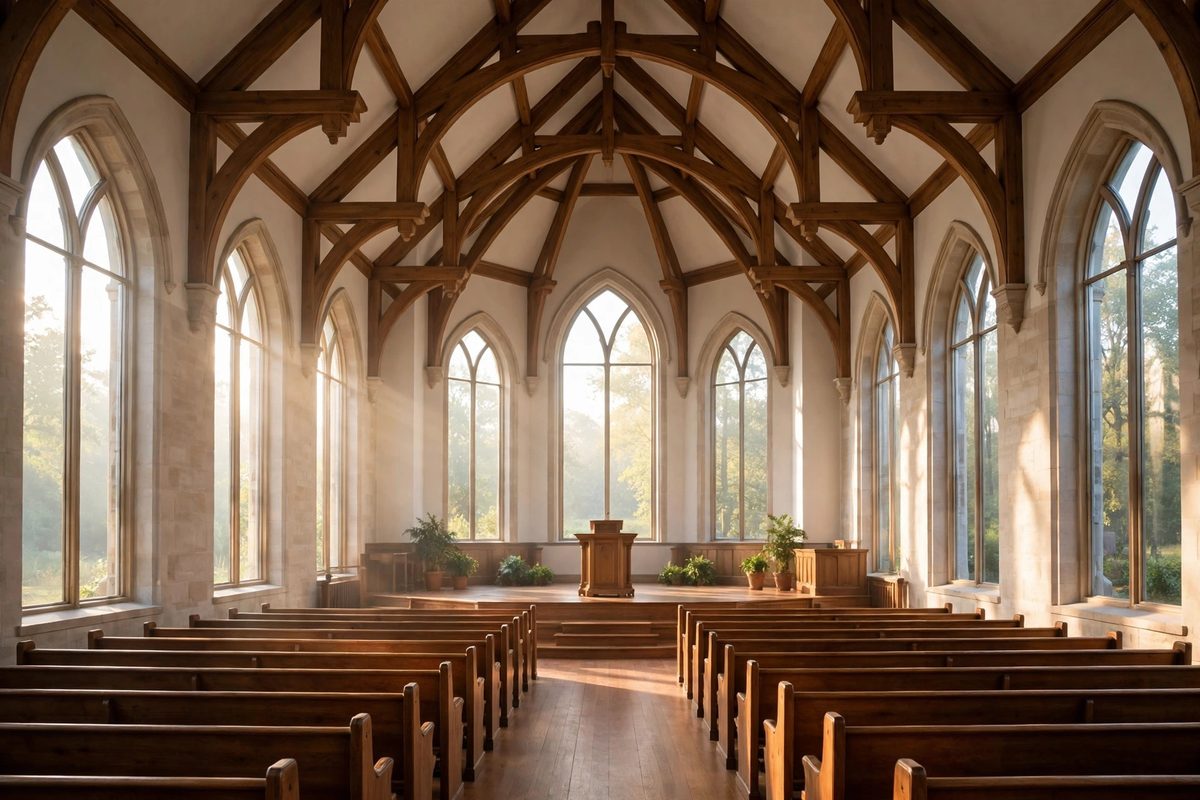
Every Sunday the same thing happens. The pastor speaks, the first few rows nod along, and somewhere in the middle the words start smearing together. Turn the system up and it gets worse, not better. The music sounds glorious. The sermon sounds like it is happening underwater.
This is the most common acoustic complaint in worship spaces, and it is almost never a sound system problem. It is a room problem.
The real culprit is reverberation
Sanctuaries are built the way they are on purpose. Tall ceilings, stone, wood, glass, hard floors. Beautiful surfaces, and all of them reflect sound. A spoken word bounces off the ceiling, the back wall, the floor, and arrives at your ear a fraction of a second late, several times over. You hear the direct sound plus a wash of delayed copies.
A little of that wash is what makes hymns and choirs sound rich and full. That is why old cathedrals feel the way they do. But the same reflections that flatter music are what blur speech. Speech needs the direct sound to arrive clearly before the reflections. When the room is too live, the reflections win, and comprehension falls apart.
The wrong fix: turn it up
When the congregation cannot hear, the instinct is to raise the volume or buy a bigger sound system. More volume in a reflective room just means more reflections. The wash gets louder along with the voice. This is why expensive speaker upgrades often change nothing. The speakers are fine. The room is answering them too loudly.
A sanctuary has two jobs, and they fight each other
Music wants a lively room. Speech wants a dry one. This is the central tension in every worship space, and the fix is never to push the room fully to one side. Deaden it completely and the choir sounds flat and lifeless, the organ loses its bloom, and the congregation stops singing because the room no longer supports them. Leave it live and the sermon stays muddy.
The goal is a middle ground. Enough control that speech stays intelligible, enough liveliness that music still breathes. Getting that balance right is where the real work happens.
What actually works
First, treat the big flat reflective surfaces that feed the worst reflections. The back wall is usually the worst offender. Sound from the front of the room hits it and bounces straight back to the congregation, arriving late and loud. The ceiling over the middle seating is another classic trouble spot, and the upper side walls near the front. Absorption placed on these surfaces shortens the reverberation where it hurts speech most.
Second, point the sound system at the people, not at the room. A well aimed system puts the voice on the congregation and keeps it off the ceiling, the back wall, and the glass. Often this means fewer, better placed speakers rather than more of them. A good aiming job can improve clarity more than a new speaker upgrade, because it stops feeding the reflections at the source.
Third, watch the under balcony zone. Many sanctuaries have a deep balcony, and the seats underneath it live in a low ceilinged cavity where sound bounces back and forth without ever reaching the main volume of the room. It is the most common dead zone in a worship space. Targeted absorption under the balcony usually transforms those seats.
Fourth, leave the room's character alone where music lives. The chancel, the choir area, the surfaces around the organ or piano generally want their reflections. The best projects treat the room selectively, quieting the spots that blur speech while keeping the music areas alive.
Why this is a measurement job, not a guess
Two sanctuaries that look alike on paper can sound completely different. Seating type, ceiling height, balcony depth, window area, even the wall finish change how the room behaves. The reliable way in is to measure the room first: reverberation time, speech clarity, and where the reflections come from. That tells you which surfaces are doing the damage and how much treatment each one needs.
Without measurements, treatment becomes guesswork. That is how sanctuaries end up with panels hung where they are easy to reach rather than where the reflections are, and with a room that looks treated but still sounds the same.
If your congregation cannot hear
If the words blur past the fifth row, or if a recent speaker upgrade did not change anything, the room is telling you what it needs. Silentical measures worship spaces across Escondido and the San Diego area and lays out treatment in the order that fixes speech first without killing the music. Call (716) 330-1147 and tell us what you are hearing, or send the room details through the quote form for a proposal.