
You check in tired, close the door, and expect quiet. Instead you hear the corridor, the television next door, and a low hum you cannot place. By morning you are awake earlier than planned.
Hotel noise is rarely one problem. It is a handful of small paths that add up, and most of them are fixable, once you know which path is doing the most damage.
A hotel room is not a house
A house has a few outside walls and a front door. A hotel room has neighbors on two sides, often above and below, a corridor full of people on the fourth side, and pipes, ducts, and elevator shafts in the walls around it.
Corridor noise comes through the door
The corridor is the busiest neighbor a hotel room has. Housekeeping carts roll past in the morning, guests talk on their way to breakfast, and doors open and close all day. Most of that sound reaches the room through the entry door.
Hotel entry doors are often lighter than guests expect, with gaps that let sound slip around all four sides. The gap at the bottom is usually the worst. If sound is clearly louder at the door than at any wall, the door is your main path.
Seals around the frame and a sweep at the bottom close those gaps, and a heavier solid door blocks far more sound than a light one. Doors are the cheapest fix in the building, so they belong at the top of any priority list.
The wall you share with the next room
The second path is the wall between rooms. Voices, television, and music travel through it, and guests notice it most at night when the building goes quiet. A wall that seems fine during the day can feel paper thin at midnight.
Shared walls fail in two ways. Sometimes the wall itself is light, with a single layer of drywall on each side and little inside it. Sometimes the wall is fine but sound travels around it, through a gap at the ceiling, a shared outlet box, or a connecting duct. A measurement can tell these apart, and the fix is different for each, so guessing here wastes money.
Adding mass helps a light wall: a second layer of drywall, properly sealed at the edges, blocks more sound than any panel hung on the surface. Panels calm echo inside a room, but they do not block sound coming through a wall. Renovation is the best opening for wall work, because the room is already open.
Pipes, elevators, and the hum you cannot place
Some hotel noise does not come from people at all. Water in pipes, a toilet flushing next door, an elevator in its shaft, and a rooftop unit cycling on and off all send sound and vibration into rooms. Guests describe a hum, a thud, or a rush of water, and often cannot say where it comes from.
Plumbing noise travels through the air and through the structure, which is why wrapping a pipe is only part of the answer. The pipe also needs separation from the wall so vibration does not pass straight into it. Elevator noise is similar: the shaft wall and the equipment room matter as much as the cab.
Heating and cooling equipment deserves its own listen. A fan coil unit in the room, a duct that carries sound between rooms, or a rooftop unit above the top floor can set the background level for a whole wing. Sometimes the fix is maintenance. Sometimes it is duct treatment or a quieter unit. Either way, start by measuring.
Why the lobby and breakfast room feel so loud
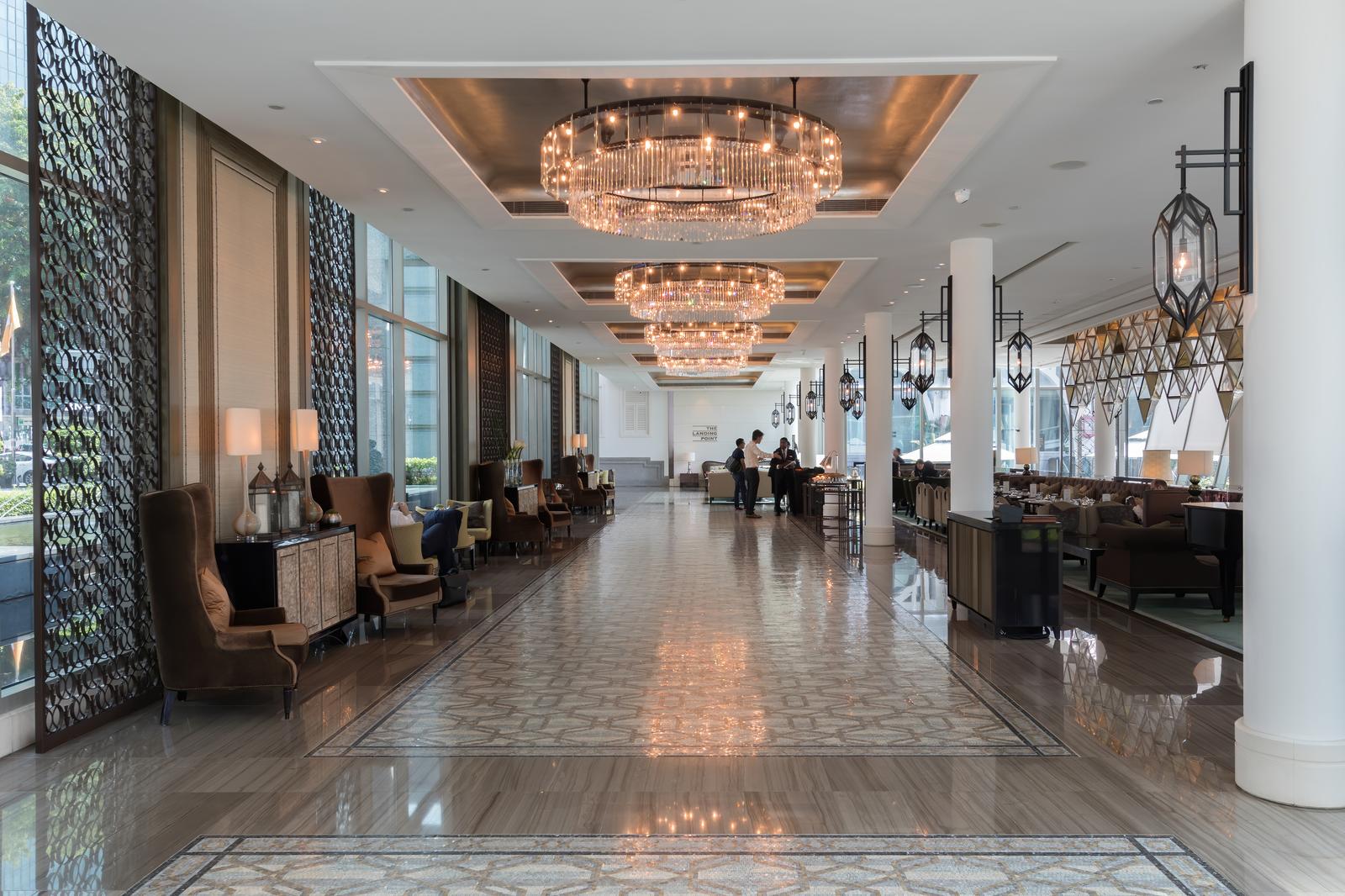
Guests also judge a hotel by its public spaces, and those spaces are built to echo. A lobby with stone floors, glass walls, and a high ceiling looks generous and sounds like a station hall. Breakfast rooms are the same: hard floors, bare tables, and a crowd talking at once.
Echo is not sound leaking through a wall. It is sound bouncing around inside the room, building up until normal conversation feels loud and tiring. The fix is absorption: panels, baffles, soft seating, rugs, and drapery, placed where reflections travel.
What a hotel noise study actually measures
A hotel noise study is a set of measurements, taken in real rooms under real conditions, that shows where sound comes from and how much reaches the guest. It replaces opinion with evidence, which matters when a renovation budget must cover dozens of rooms.
Between rooms, the study measures how well the wall blocks airborne sound, the rating usually called STC. Between floors, it measures footstep and impact sound, the rating usually called IIC. It also measures background levels inside rooms, in corridors, and near equipment, day and night.
A good study also listens for paths, not just levels. It checks the door, the shared wall, the ceiling, the pipes, and the ducts, and notes which one dominates in each room type. The report then ranks the fixes, so a hotel can start where guests complain most, and prove the improvement by measuring again after the work. Silentical offers noise monitoring and noise studies across Southern California, including Escondido and San Diego County.
The fixes, in priority order
The order below holds up in most buildings. It starts cheap and fast, and moves toward bigger work only where measurement says it is needed.
- Seal entry doors on the noisiest floors: frame seals, a bottom sweep, and a heavier door where the existing one is light.
- Quiet the corridor with soft flooring or runners, and seals on service doors.
- Find and close flanking paths: gaps at ceilings, shared outlet boxes, and ducts that link rooms.
- Treat the lobby and breakfast room, where guests notice it immediately.
- During renovation, add mass to the worst shared walls, and separate pipes and ducts.
- Service or replace noisy heating and cooling equipment, and treat ducts that carry sound between rooms.
- Measure again after the work, and roll the winning fixes out across the building.
What guests can do tonight
Travelers have a few moves that help. Ask for a room away from the elevator, the ice machine, and the housekeeping closet, and away from the pool or breakfast room. Upper floors are often quieter, and end of corridor rooms get less foot traffic. Once inside, a rolled towel at the bottom of the door softens corridor sound a little, and a steady fan can cover small sounds that remain. If noise ruins the night, say so at checkout in plain terms: what you heard, when you heard it, and which side of the room it came from.
When a hotel should call for a study
Three patterns call for measurement: repeated complaints about the same rooms or floors, a renovation or brand refresh when walls are open anyway, and a new build or conversion where a study before opening can catch a weak wall or noisy shaft while it is still cheap to change. A study also protects the budget, because treating every wall is expensive and treating the wrong one is worse.
The bottom line
Hotel rooms are noisy because they share walls, doors, pipes, and corridors with dozens of neighbors, and because lobbies and breakfast rooms are built to echo. None of that is permanent. Doors first, corridors second, walls during renovation, and measurement before big spending: that order turns a complaint pattern into a quieter building, one floor at a time.
If your hotel has rooms guests keep flagging for noise, or you are planning a renovation in Escondido or San Diego County, request a free quote at silentical.com/quote/ or call (716) 330-1147 and tell us which rooms and sounds guests mention most. We will help you measure the real paths first.