
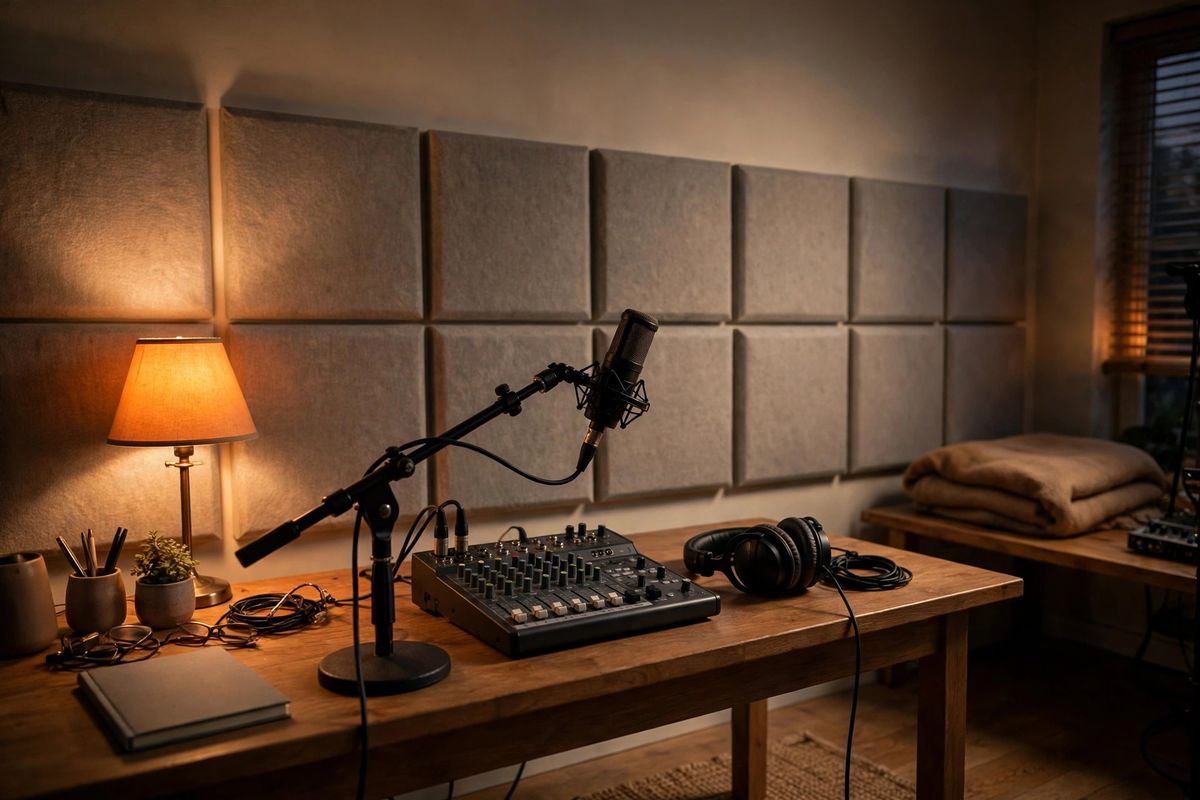
A home studio has two noise problems, and they need different fixes. The first is sound getting in and out: a barking dog during a vocal take, drum practice leaking into the rest of the house. The second is the sound inside the room: flutter echo between bare walls, muddy bass in the corners, a mix that sounds great in the studio and wrong everywhere else.
Most home studio builds go sideways because these two jobs get mixed up. Foam panels make a room sound better inside, but they do almost nothing to stop sound from passing through the wall. Once you separate isolation from treatment, the project gets simpler and cheaper.
Start with isolation, and start with the leaks
Isolation is about keeping sound on its own side of the wall. Sound behaves a lot like air here. Where air can pass, sound can pass. So before anything else, find the gaps. The door is usually the weakest part of a studio room, especially a hollow interior door with a gap underneath it. A solid core door, proper weatherstripping, and a sweep that actually meets the floor will do more than a wall of foam ever will. The same goes for windows, vents, and any place where pipes or cables pass through a wall. Seal first. It is the least exciting step and the one that pays off most.
After sealing comes mass. Heavier walls block more sound than lighter ones, which is why a second layer of drywall helps, and why a dense barrier layer behind it helps further. Decoupling helps too: when the inner wall surface is separated from the framing instead of screwed tight to it, vibration has a harder time crossing over. Damping, a compound applied between two rigid layers, turns some of that vibration into heat instead of sound. A serious studio build uses these tools together rather than betting everything on one.
One honest expectation: bass is the hardest part to contain. Low frequencies carry through structures in a way that voices and guitars do not, so fully containing a loud drum kit in a spare bedroom is a different project from quieting a voiceover booth. If low end is your main problem, say so early.
Then treat the room you have
Once the room is reasonably isolated, treatment makes it usable. Absorbers on the walls calm reflections so you hear the recording, not the room. Bass traps in the corners deal with the low end buildup that makes mixes sound boomy in the studio and thin everywhere else. Diffusers scatter sound instead of soaking it up, which keeps a room from sounding dead while still keeping reflections under control.
Small rooms need a different approach than big ones. The rules written for commercial studios assume space you do not have. In a bedroom studio, treat the first reflection points, where sound bounces straight from the speaker to your ears, and put real depth of absorption in the corners for bass. Thin panels across every wall mostly tame high frequencies and leave the real problems untouched.
Ventilation deserves a line of its own. A sealed room gets hot and stuffy fast, but an open vent is a sound tunnel. Plan quiet air movement as part of the build, not as an afterthought once the walls are closed.
A sensible order of work
If you are setting up a home studio, work in this order. First, decide what the room has to do: voice work, podcasting, mixing, or full band rehearsal. Each one asks for a different level of isolation. Second, seal the room and fix the door. Third, add mass and damping to the walls and ceiling if the budget allows. Fourth, treat the inside of the room, starting with reflection points and corners. Fifth, sort out quiet ventilation. Skipping ahead to treatment before isolation is the most common way to spend money twice.
You do not need to do all of this at once. Plenty of good studios grow in stages: a sealed door and basic treatment now, a heavier wall build later, each stage adding to the last one.
If you are planning a studio in the San Diego area and want help sorting out which steps your room actually needs, that is what an acoustical consultation is for. We can look at the room, the noise sources, and what you record, and put together a plan that fits the space and the budget. Browse the catalog and send a quote request through silentical.com, or call us at (716) 330-1147.