
Watch the 43 second version on YouTube.
The loudest room in the house is the smallest one
Every home has one room that gives itself away. You flush the toilet at two in the morning and the whole house hears it. Someone runs the shower and the bedroom next door gets the full show. The bathroom is the smallest room in the house and the loudest one, and that is not an accident. It is built that way.
A bathroom packs four noise sources into a tiny box: water rushing through pipes, a toilet flushing, a vent fan that drones for hours, and hard tile and glass that bounce every sound back at you. Then it puts a hollow door on the front and a gap under it, so all of that noise walks straight out into the hallway. This guide explains how to soundproof a bathroom in plain English: where the noise really comes from, what actually quiets each source, and the order to fix them in so you spend the least first.
Where bathroom noise really comes from
Most people blame the walls. The walls are rarely the problem. Bathroom noise has four separate sources, and each one needs its own fix. Treating the wrong one is how people spend real money and hear no difference at all.
First, the pipes. Water moving through a pipe shakes the pipe. The pipe is clamped to the studs, the studs shake the wall, and the wall plays the sound into the room next door. A flush is a sudden rush of water, which is why it sounds like a drumbeat through the wall. A shower is a steady rush, which is why it sounds like a waterfall in the bedroom.
Second, the toilet itself. The fill valve hisses while the tank refills, and the flush sends a burst of water down the drain pipe. In older homes the drain pipe often runs through a shared wall, so the flush is loudest in the room on the other side of that wall.
Third, the vent fan. A cheap fan rattles, hums, and drones. It runs for twenty or thirty minutes after every shower, and in some homes it runs all day because nobody wants to touch the switch. The fan also needs a duct, and a short straight duct carries the fan noise and the bathroom noise straight outside, or straight into the next room.
Fourth, the echo. Tile floors, a glass shower door, a big mirror, and bare walls make a bathroom one of the most echoing rooms in any home. Every sound in there gets louder because it bounces around instead of dying out. The echo does not create noise, but it makes all the other noise feel twice as loud.
Start with the pipes in the wall
Pipe noise is structure borne noise, which means it travels through the structure of the house, not through the air. That is why closing the bathroom door does nothing about it. The sound is already in the wall.
The fix is to break the path between the pipe and the wall. Pipe lagging is a wrap that goes around the pipe, and it soaks up the rush of water before the pipe can pass it on. Resilient clips hold the pipe away from the studs so the shake does not reach the wall directly. On a remodel, a second layer of drywall on the shared wall adds mass, and mass blocks sound. Mass loaded vinyl around the pipe chase does the same job in a tight space.
Plastic drain pipes are louder than old cast iron ones. Cast iron is heavy, and heavy things do not shake easily. If your home has plastic drain pipes and the flush is the loudest sound in the house, that is probably why. Wrapping those pipes is the single most effective fix for flush noise, and it is the fix most people skip because the pipes are hidden.
One honest note: wrapping pipes means opening the wall. If you are already remodeling the bathroom, do it then, while the wall is open. It costs very little at that point. Opening a finished wall just for the pipes is a bigger job, and it is worth getting a price from a contractor before you decide.
The door is the leak
Here is the cheapest fix in the whole bathroom, and the one most people never try. Most bathroom doors are hollow. Pick one up and it feels light. Knock on it and it sounds like a drum. Sound walks straight through a hollow door, and the gap under it lets the rest through. A bathroom door with a one inch gap underneath is like leaving a small window open all the time.
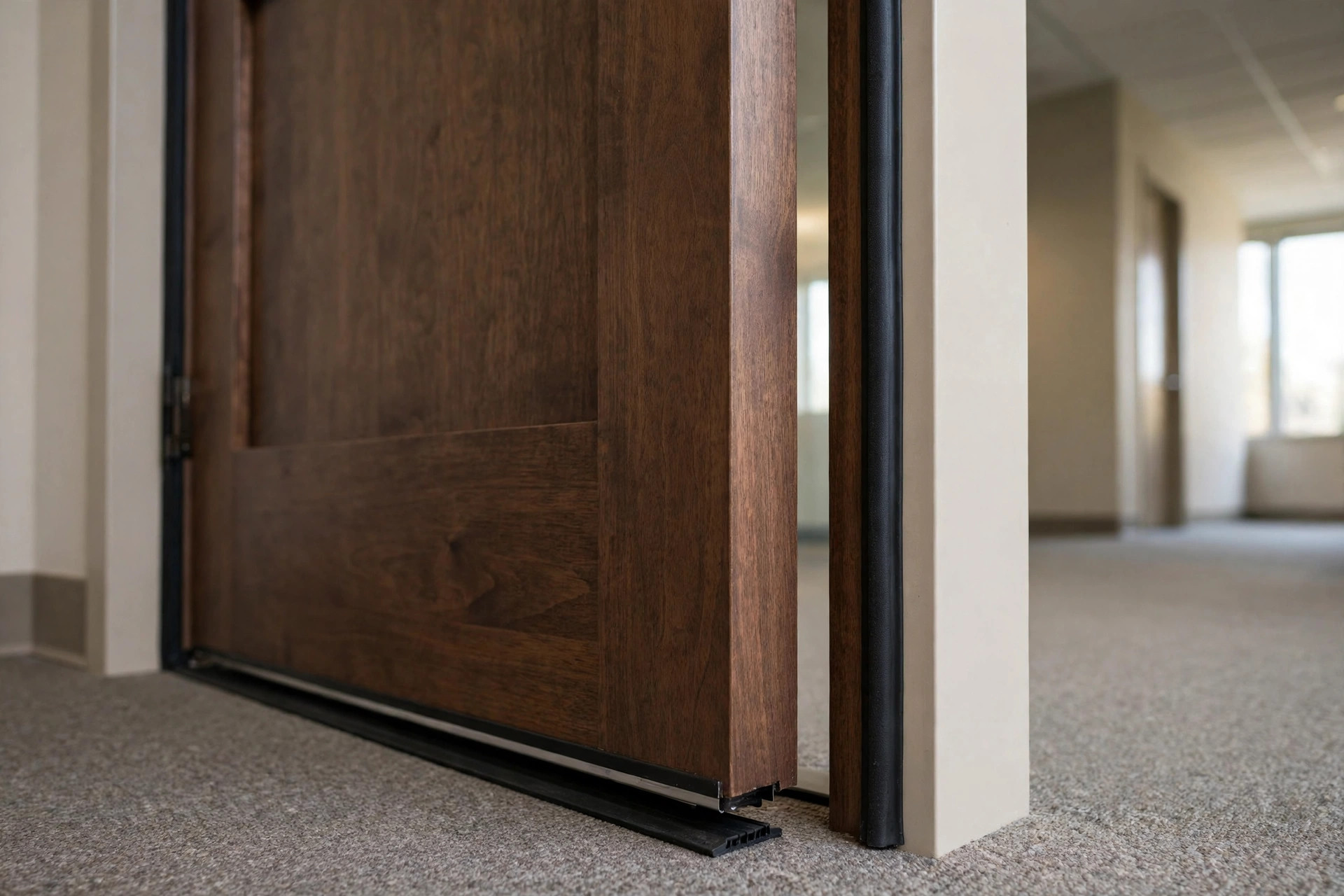
Fix the door before you touch anything else. A door sweep closes the gap at the bottom. Foam seals or rubber seals around the frame close the gaps at the sides and the top. Both together take under an hour and cost less than a dinner out. If the door is still the weak point after sealing, a solid core door replaces the hollow one with real mass. A solid door plus seals is a different room to stand next to.
Check the door after the seals go on. Close it at night and stand in the hallway while someone runs the tap. If the sound drops by a clear step, the door was the leak. If nothing changes, the noise is coming through the wall, and the pipes are the next place to look.
The fan that never stops humming
A vent fan has one job: move damp air out of the bathroom. A cheap fan does that job loudly. The hum comes from the motor and from the blades, and a fan mounted tight against drywall passes the shake straight into the ceiling.
A quiet fan is a real upgrade, not a luxury. Look for a fan rated for low noise and put it on a timer switch so it runs for twenty minutes after a shower and then stops. A flexible duct with a gentle bend is quieter than a short straight metal duct, because the bend breaks up the sound path. Keep the duct run as short as you can, and never let it end in the attic space above a bedroom.
Do not just switch the fan off and leave it off. The fan is there to stop damp and mould. A bathroom with no working fan trades a noise problem for a damp problem, and damp costs far more to fix.
Calm the echo and the room feels quieter
Tile and glass are the reason a bathroom sounds so harsh. Every hard surface bounces sound back, so a flush echoes and a fan drones. Soft surfaces soak sound up. A thick bath mat, folded towels on open shelves, a fabric shower curtain instead of a glass door, and a rug in front of the sink all take the edge off. None of them block sound from leaving the room, but they make the sound inside the room far less sharp, and that changes how loud the bathroom feels.
Acoustic panels can help here too, but only the kind made for damp rooms. Standard fabric panels soak up steam and grow mould. Polyester fiber panels handle moisture far better, and they can go on the wall above the tile line where they stay dry. If your bathroom has a window, heavy curtains over it help twice: they soften the echo and they block street noise from coming in.
What does not work
Acoustic foam on the wall will not stop pipe noise or flush noise from reaching the next room. Foam calms echo inside the room, which helps, but it does nothing about sound traveling through the wall. A thick rug alone will not fix a hollow door. Turning the fan off will not fix the pipes. And a white noise machine in the hallway is a mask, not a fix. It covers the bathroom noise with a different noise, and the moment it switches off the pipes are still there.
The mistake is treating a bathroom like a recording studio. A studio needs the sound inside the room to be perfect. A bathroom needs the sound to stay inside the room. Those are two different jobs, and the second one is mostly about the pipes, the door, and the fan.
The order to fix it in
Start cheap and work up. First, seal the door: a sweep and seals around the frame, under an hour, and you will know the same night if it helped. Second, sort the fan: a quiet fan on a timer, and a flexible duct if the old one is a short straight run. Third, soften the echo with towels, a mat, and a fabric curtain. Fourth, if the noise is still coming through the wall, wrap the pipes and add mass to the shared wall. That last step is the real fix for flush noise, and it is the one worth doing properly during a remodel.
Test as you go. Run the shower, flush the toilet, and stand in the next room after each step. Fixing one source at a time tells you which source was the loud one, and it stops you spending money on a fix for a problem you already solved.
When to call for a measurement
Some bathroom noise is a building problem, not a weekend job. If the flush is clearly audible two rooms away, if a hotel or a short term rental keeps getting noise complaints about the bathrooms, or if you are planning a remodel and want to know which wall is carrying the sound, a measurement tells you the truth. A noise study finds the path the sound is taking, and a consultant can tell you whether the fix is pipe lagging, a second layer of drywall, or a different fan. That is the point where guessing stops and a plan starts.
If the noise from your bathroom is part of daily life, or your guests keep mentioning it, request a free quote at silentical.com/quote/ or call (716) 330-1147. Tell us what you hear most, the flush, the shower, or the fan, and we will tell you which fix comes first.