
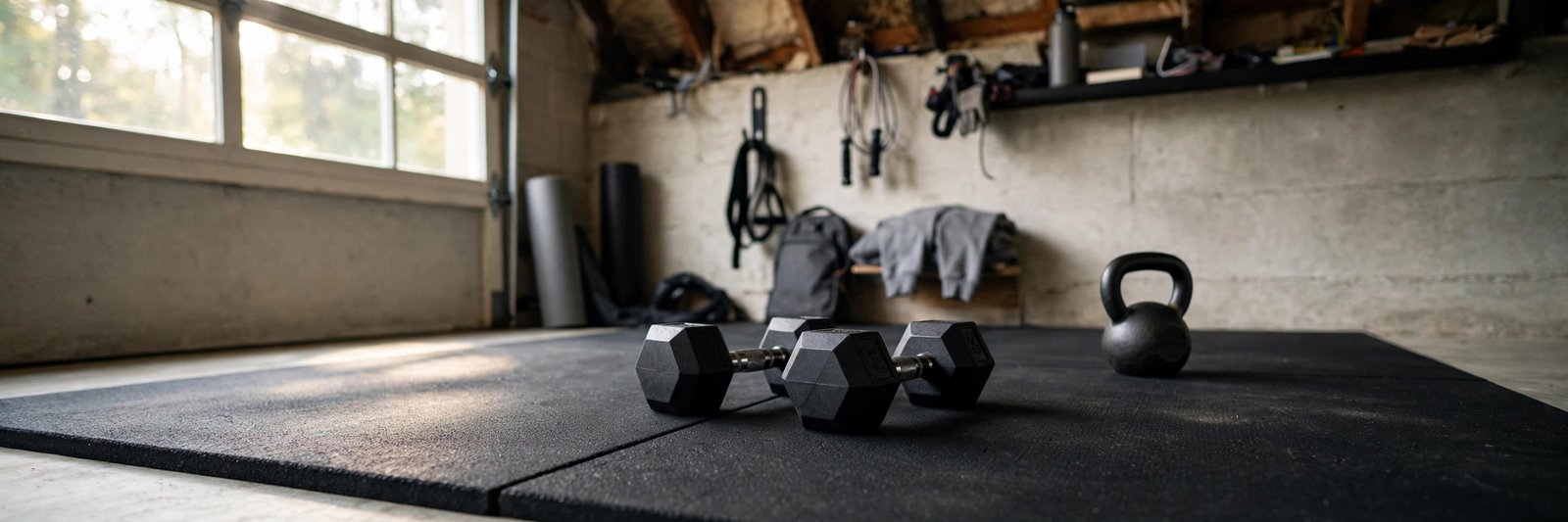
A home gym is a gift to yourself and a headache for everyone else in the house. Dumbbells hitting the floor, music pushing through walls, a treadmill humming through the ceiling below. It is some of the hardest noise to control because a gym produces both impact noise and airborne noise at once. Knowing which one you are dealing with is the key to fixing it.
Two kinds of gym noise, two kinds of fixes
Impact noise comes from things hitting the structure: weights dropped on the floor, feet pounding on a treadmill belt, a barbell racked hard. It travels as vibration straight through floors and walls, and it shows up in rooms you would not expect because structure carries it so well.
Airborne noise travels through the air: your music, the whir of a fan or the treadmill motor. It leaks through the usual paths, which are doors, windows, gaps, and thin walls.
Most home gym complaints are impact problems. That matters because impact noise is harder to fix than airborne noise, and the fix almost always starts at the floor.
Start with the floor
The floor is where gym noise is born, so it is where treatment matters most. The goal is to stop vibration from entering the structure in the first place.
A thick rubber gym mat helps, but it mostly cushions the surface you are standing on. To actually isolate impact, the heavy load needs to land on something that absorbs the energy before it reaches the floor. Dedicated gym flooring layers dense rubber over isolation pads designed for impact, spreading the load and decoupling it from the slab or subfloor beneath. A simple plywood and rubber platform under a lifting station can make a real difference for dropped weights, because the platform takes the hit instead of the building.
Where you put the gym matters as much as what is under it. A ground floor room or a garage is far more forgiving than a room above a bedroom. If the gym has to go on an upper floor, be honest with yourself about how much impact the space can take. Some situations need structural treatment that is simply not practical in a home, and in that case choosing the right location is the fix.
Then handle the airborne noise
Once the floor is sorted, treat the gym like any other room with sound leaking through it. A hollow-core door is the usual weak point, and sealing the gaps around it plus upgrading to a solid door is one of the highest-value changes in any soundproofing project. Gaps matter everywhere. Sound finds the easiest opening, so weatherstripping, sealed penetrations, and closed duct paths are the unglamorous work that makes the real difference.
Acoustic panels on the walls will make the gym sound better from the inside. They cut down the harsh echo so your music is clearer and the room feels less loud to you. Just know their limit: they improve the sound inside the room, they do not block sound from leaving it. That is a common and expensive misunderstanding.
The treadmill special case
Treadmills deserve their own mention because they are both noise types at once. The motor hums, which is airborne, and every footstep is an impact traveling through the floor. An isolation pad or mat under the treadmill handles the footfall vibration, while the motor noise usually falls once the airborne paths in the room are addressed.
A note on ventilation
Gyms get hot, and a sealed-up room with no airflow is miserable. Do not crack a window and hope for the best, since an open window is an open hole for sound. Plan ventilation the same way you plan the rest of the treatment, which means keeping air paths routed and baffled rather than cutting straight openings.
When to bring in a professional
A mat and a solid door solve a lot of home gym setups. If the noise still travels after that, or if the gym sits above living spaces or shares a wall with neighbors, the problem usually involves paths you cannot see, like vibration flanking through connected framing or ductwork carrying sound between rooms. That is the point where an assessment pays for itself.
The bottom line
Home gym noise is a two-part problem. Tame the impact at the floor first, then close the airborne paths like you would in any room. Match the treatment to the noise type and you get a gym that works out for everyone in the house, not just the person in it.
If you are setting up a gym and want a plan before you buy anything, we can help. Add products to a quote cart on the site, or request a proposal for a professional assessment. Call (716) 330-1147 and tell us about the room. We will tell you honestly what it needs.