
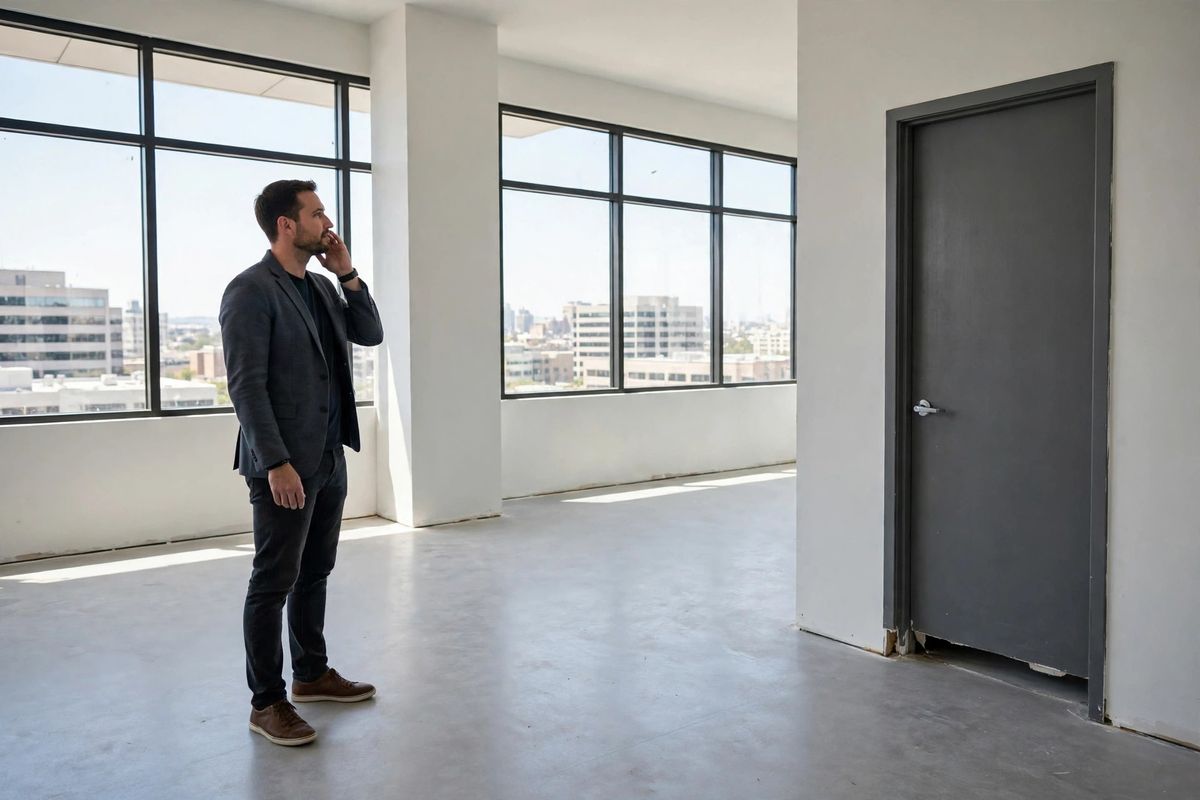
Most business owners tour a new space the same way. They walk in during a quiet part of the day, look at the light, picture where the desks or tables will go, and decide it feels right. Then they sign a lease that lasts years. The noise problem, if there is one, usually shows up later, once the business is actually running.
That is the wrong order. Noise is much easier to judge before you commit than after you move in. A short noise check before signing can tell you what a ten minute walkthrough cannot.
A quiet walkthrough is not a quiet space
Spaces sound different at different times of day. A room that feels calm at noon can sound very different during the morning rush, when delivery trucks arrive, when the gym next door runs a class, or when the restaurant downstairs fires up its kitchen. A brief visit on a quiet afternoon misses all of that.
It also misses how sound travels inside the building. You may not hear the neighboring business during your tour because nobody is there yet. Once both businesses are open, voices, music, footsteps, and equipment can travel through shared walls, ceilings, ducts, and floors.
What a noise check actually looks at
A noise check starts with listening in the real conditions the space will face, at the times it will actually be used, not just when it happens to be empty.
It looks at where sound is coming from. Is it coming through the walls from next door, down from the ceiling, up through the floor, in through the windows and doors, or through the ventilation system? Each path needs a different kind of fix, and knowing the path matters more than knowing the overall loudness. Treating the wrong path is how people spend money and still hear the same noise.
It also looks at what the space will be used for. A therapy office, a classroom, a restaurant, and a warehouse do not need the same level of quiet. A little background sound that is fine in a busy cafe can be a real problem in a room where private conversations happen.
Finally, a good check separates two different problems. One is sound leaking in from somewhere else. The other is echo inside the room itself, caused by hard surfaces bouncing sound around. Blocking sound and calming echo are different jobs, and a space can need one, the other, or both.
Why this matters before you sign
Once the lease is signed, your options shrink. Major soundproofing work may need the landlord's permission, and it may not be practical in a space you do not own. Even smaller fixes can be disruptive once furniture, equipment, and customers are in place. A noise problem found after opening tends to become something you live with or pay to fix under pressure.
Before signing, you still have choices. You can ask the landlord about work that would be needed, negotiate who pays for it, and compare two spaces with real information instead of a feeling.
What to notice on your own visit
You do not need equipment to spot warning signs. Visit at a busy time if you can, and listen with the door closed. Notice traffic, voices next door, footsteps above, and humming from vents or rooftop equipment.
Look at the shared walls, the ceiling, and the doors. Gaps under doors, thin hollow doors, single pane windows facing a busy road, and vents shared with a neighboring unit are all places sound gets through. Ask what is on the other side of each wall, above you, and below you, and when those neighbors are busiest.
A short visit now, a better space later
A noise check does not need to slow down a deal. It is simply a careful listen, in real conditions, before a long commitment. It tells you what the space will really sound like when it is full and busy, and what, if anything, would need to change to make it work for your business.
If you are looking at a space in the San Diego or Escondido area and want a second set of ears before you sign, we can help. We visit the space, listen to how sound actually moves through it, and lay out what would fix it in plain terms, so you can decide with real information.
Browse the shop and send us a quote request through the website, or call us at (716) 330-1147 to arrange a consultation. A lease lasts a long time. It is worth making sure the quiet you heard on the tour is the quiet you will actually get.